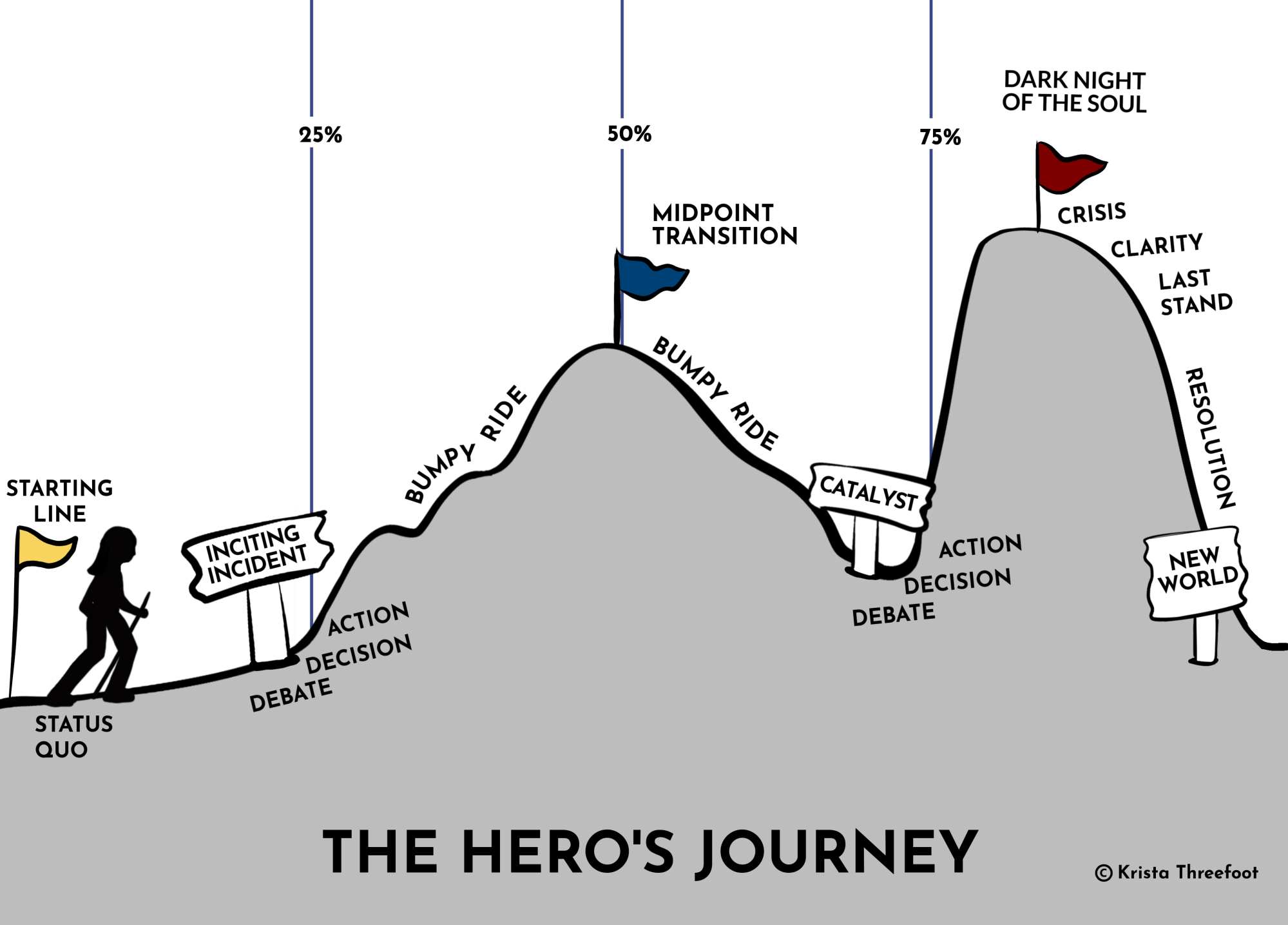
PLOTTING THE HERO’S PATH
Jessica Brody’s Save the Cat! Writes a Novel is a phenomenal resource to lead your hero through the ups and downs, the turn-arounds, the all-is-lost moment, all the way to the surprising but inevitable conclusion without letting them wander into oblivion. Save the Cat is a staple on my bookshelf, but I also love a good graphic to help me visualize the main action driving my story.
The expert guidance lives in Jessica’s book, but here’s my quick take on each point on the path.
Starting Line/Status Quo
This is the BEFORE world where our hero’s problem originated. It takes up about 20% of the novel, setting the stage for the incident that changes everything.
Inciting Incident
This is the flame that lights the fire under our hero’s feet. The big event that changes everything and triggers the internal debate about what they should do and their decision to take the action that propels them into their AFTER world. In a well-paced novel, the decision to act happens about 25% into the story.
The Bumpy Ride
During the bumpy ride, our hero adjusts to their new reality, acting and reacting to the challenges and triumphs that guide both their external plot and internal growth.
The Midpoint Transition
About halfway through the story, things change for our hero. If their bumpy ride brought more challenges than triumphs, something happens to make things (appear) better. If life has been going their way, the tides turn against them. No matter what direction things take, the midpoint transition triggers the second bumpy ride and affects how the hero reacts to the final catalyst.
Catalyst
The catalyst is the big, bad event our hero has been hurtling toward from the moment they set out on their journey. It’s usually related to decisions they’ve made, problems they’ve been avoiding, the culmination of external forces holding them back, or the antagonist taking the upper hand. It happens at the 75% point and triggers the next debate, decision, and action.
Dark Night of the Soul
This is the moment when all seems lost. The hero is losing, either to their external foe or their inner demons. They are in crisis, which forces a moment of clarity, in which they realize they’ve been solving their problem the wrong way. This epiphany inspires them to change tactics and take one last stand.
Resolution
Now that our hero is solving their problem the right way, they’re able to emerge (at least partially) triumphant. Their life isn’t perfect, but they experienced an internal change for the better, which makes them stronger and more prepared to handle their challenges.
The End
Our hero’s story is over and we, the readers, walk away satisfied and hoping for a sequel.
 KRISTA THREEFOOT